A vehicle breakdown can happen without warning, whether you are commuting through downtown Santa Ana, driving along Bristol Street, or traveling on Interstate 5. When a vehicle suddenly stops working, one important question is whether it can be transported using light-duty equipment or requires a medium-duty towing setup. Choosing the appropriate service depends on more than the vehicle’s appearance. Its weight, dimensions, mechanical condition, and current load can all affect the transportation requirements.
For drivers searching for Light Duty Towing in Santa Ana, CA, understanding these differences can make it easier to explain their situation and request suitable assistance. A passenger car with engine trouble may have different requirements from a loaded commercial van or a larger work truck. I Tow’d You Towing Services LLC provides light and medium-duty towing options for different vehicle transportation needs throughout Orange County.
Why Does Your Vehicle Type Matter When Requesting Towing?
Not every disabled vehicle can be transported using the same equipment. A compact sedan, family SUV, pickup truck, and commercial van have different dimensions and weight requirements. Even two vehicles from the same category may require different towing arrangements depending on their condition.
For example, a passenger car that experiences an engine failure may be suitable for light-duty towing. However, a larger work vehicle carrying tools and equipment could require a different setup.
Before requesting assistance, consider these details:
- Vehicle dimensions: Overall length, width, and height can affect loading and transportation.
- Vehicle weight: The actual weight and manufacturer specifications help determine equipment requirements.
- Mechanical condition: Damaged steering, suspension, or wheels may complicate loading.
- Cargo: Tools, materials, and other items can increase the vehicle’s total weight.
- Pickup location: Narrow streets, parking structures, and busy roads can affect access.
Providing these details helps the towing provider evaluate the situation instead of relying only on the vehicle’s general category.
When Is Light-Duty Towing the Right Choice?
Light-duty towing is generally suitable for smaller vehicles that can be handled by appropriately rated light-duty equipment. Common examples include passenger cars, compact SUVs, standard pickup trucks, and certain smaller vans.
Imagine a driver traveling near downtown Santa Ana whose sedan suddenly develops an engine problem. The vehicle cannot continue running, but its wheels and steering remain suitable for loading. Depending on its specifications and condition, a light-duty tow truck may be an appropriate option.
Other situations that may involve light-duty towing include:
- Passenger cars experiencing mechanical failure.
- SUVs that cannot restart because of engine trouble.
- Smaller pickup trucks requiring transportation to an automotive repair shop.
- Family vehicles that have become unsafe to drive.
- Disabled vehicles that need relocation to a residence or dealership.
However, vehicle size alone does not determine the appropriate equipment. A damaged passenger car may require special loading arrangements, even if its overall weight is relatively low.
Drivers can learn more about available vehicle transportation options on the Light and Medium Duty Towing service page.
When Does a Vehicle Need Medium-Duty Towing?
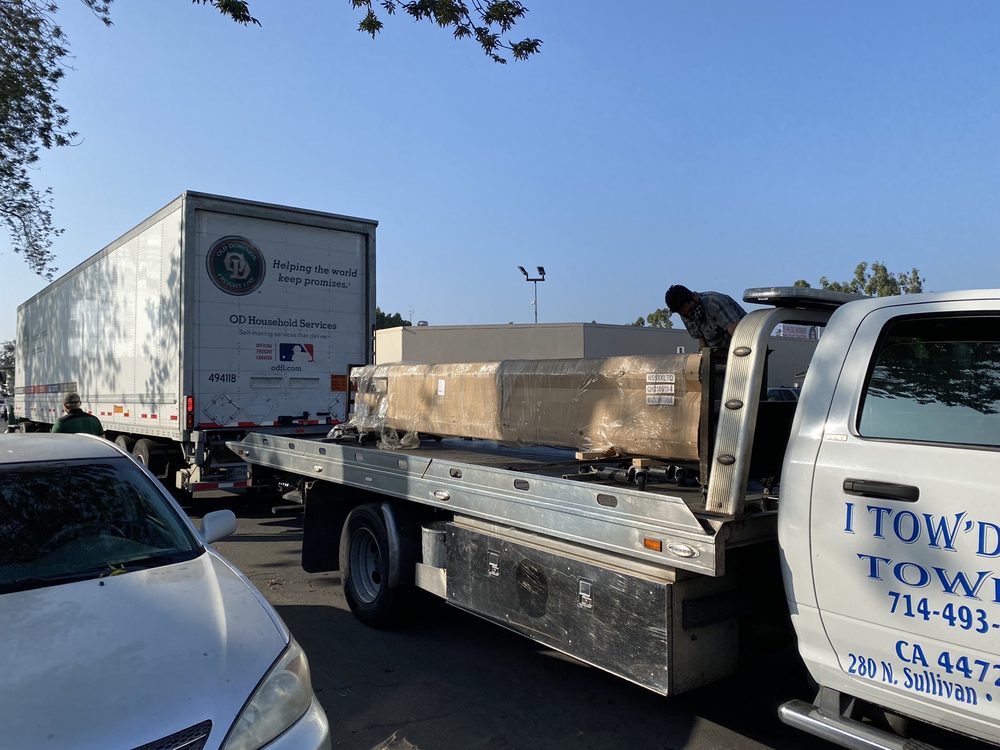
Medium-duty towing is generally intended for larger or heavier vehicles that exceed the practical capacity of standard light-duty equipment. Depending on their specifications and condition, these may include commercial vans, work trucks, and certain larger business vehicles.
Consider a contractor operating a loaded work van around Santa Ana. If the vehicle experiences transmission failure while carrying tools and materials, its total weight and configuration may require a larger towing setup.
Medium-duty towing may be appropriate for situations involving:
- Larger commercial vans that cannot continue operating.
- Work trucks carrying business equipment.
- Heavier pickup trucks with additional cargo.
- Certain larger fleet vehicles.
- Vehicles that exceed the capacity or loading requirements of light-duty equipment.
The important factor is the actual vehicle and its transportation requirements, not simply its appearance.
One useful specification to understand is Gross Vehicle Weight Rating (GVWR). It represents the maximum operating weight specified by the manufacturer, including the vehicle and its permitted load.
The California Energy Commission provides information about vehicle weight classifications. Remember that regulatory weight classifications and commercial towing service categories are not necessarily interchangeable.
5 Warning Signs That Your Vehicle May Need a Different Towing Setup
When a vehicle breaks down, drivers may not know which towing category is appropriate. These five considerations can help identify when a different equipment setup may be necessary.
1. Your Vehicle Is Larger Than a Standard Passenger Car
A large commercial van or work truck may require more towing capacity than a regular sedan. If your vehicle has greater dimensions or a heavier configuration, explain its exact make and model when requesting assistance.
2. Your Vehicle Is Carrying Heavy Equipment
A work truck that is empty may have different transportation requirements from the same truck carrying tools, construction materials, or business equipment.
Mention any cargo that could affect the vehicle’s current weight. This information can help the towing provider assess the situation.
3. Your Vehicle Has Suspension or Steering Damage
A broken suspension component, damaged wheel, or steering problem can make conventional loading more difficult.
Even if the vehicle is relatively small, its mechanical condition may require additional planning before transportation.
4. Your Vehicle Has Been Involved in an Accident
Collision damage can affect the wheels, body, suspension, and steering system. A vehicle that cannot roll normally may require a different loading approach.
In this situation, accident towing services may be relevant, depending on the damage and transportation requirements.
5. Your Vehicle Cannot Be Safely Loaded Using Standard Equipment
If the vehicle exceeds the available truck’s weight capacity or cannot be secured properly, a different towing arrangement may be necessary. The provider should assess the vehicle before selecting the equipment.
These considerations are particularly important when arranging Light Duty Towing because the appropriate setup depends on the specific vehicle and breakdown circumstances.
How Can You Help the Towing Provider Choose the Right Equipment?
You do not need to know every technical towing specification before requesting assistance. However, sharing accurate information can make the process easier.
Start by explaining the vehicle’s make, model, and approximate size. If it is a commercial vehicle, mention whether it is carrying tools, equipment, or other materials.
You should also explain whether the vehicle starts, whether its wheels can move, and whether there is any visible mechanical or accident damage.
The pickup location is equally important. A vehicle stopped along Bristol Street may present different access conditions from one parked inside a commercial property or residential driveway.
Finally, explain where the vehicle needs to go. It may need transportation to an automotive repair facility, dealership, residence, or business location.
The California DMV commercial vehicle registration resource provides additional information about commercial vehicle requirements and classifications.
What Should You Do When Your Vehicle Breaks Down on a Busy Santa Ana Road?
A breakdown on a busy road can create safety concerns, particularly when other vehicles are passing nearby.
If your car stops working near Bristol Street, downtown Santa Ana, or an entrance to Interstate 5, prioritize your safety before arranging transportation.
Follow these precautions:
- If possible, move the vehicle away from active traffic lanes.
- Turn on your hazard lights when appropriate.
- Avoid standing directly in traffic or behind a disabled vehicle.
- If it is unsafe to remain inside, move to a protected location when possible.
- Contact emergency services if the vehicle creates an immediate traffic hazard or someone is injured.
Once you are in a safe position, contact a towing provider and explain your location, vehicle type, and condition.
The California Highway Patrol provides official information about highway safety and roadside assistance.
Can Roadside Assistance Solve the Problem Without Towing?
Not every breakdown requires a tow truck to transport the vehicle. Sometimes the problem can be addressed at the roadside, depending on the cause and the vehicle’s condition.
For example, a vehicle with a flat tire may need flat tire assistance rather than transportation to a repair shop.
Other common situations include:
- Dead battery: A vehicle that will not start may need jumpstart service.
- Empty fuel tank: Drivers who run out of fuel may need fuel delivery.
- Locked keys: A driver who accidentally leaves their keys inside may need vehicle lockout assistance.
- Vehicle stuck in mud: A car or truck that cannot move from soft ground may require winch-out assistance.
If the problem cannot be resolved safely at the roadside, transportation may still be necessary. A provider can evaluate whether light-duty or medium-duty equipment is appropriate.
For drivers who simply need their vehicles transported to another nearby destination, local towing services may also be an option.
Where Can You Request Towing Assistance Around Santa Ana?
Santa Ana includes residential neighborhoods, commercial districts, shopping areas, and major transportation routes. Breakdown situations can occur in any of these environments, so providing an accurate pickup location is important.
For example, a vehicle that stops working near downtown Santa Ana may need to be accessed from a busy street, while a breakdown near a shopping destination may involve a parking area with limited space.
I Tow’d You Towing Services LLC serves Santa Ana and other communities throughout Orange County.
Drivers can also explore the company’s nearby service-area pages:
- Towing Services in Santa Ana, CA
- Towing Services in Tustin, CA
- Towing Services in Orange, CA
- Towing Services in Irvine, CA
Each location has its own road network and driving conditions. Sharing a street address, nearby intersection, or recognizable landmark can help the provider understand where assistance is needed.
For additional information about freeway support in Orange County, the Orange County Transportation Authority’s Freeway Service Patrol explains the roadside assistance available on selected freeway sections.
What Information Should You Provide Before Requesting a Tow Truck?
Before contacting a towing provider, prepare a few basic details about your situation.
1. Vehicle make and model: Explain whether you have a sedan, SUV, pickup, van, or commercial truck.
2. Vehicle condition: Describe whether the engine starts, the wheels move, or the steering system is damaged.
3. Current cargo: Mention tools, equipment, or other materials that may affect the vehicle’s weight.
4. Pickup location: Provide the street address, nearby intersection, or recognizable landmark.
5. Destination: Explain whether the vehicle needs to go to a mechanic, residence, dealership, or another location.
6. Visible damage: Mention accident damage, flat tires, or other problems affecting transportation.
If you are unsure whether your vehicle requires light-duty or medium-duty towing, avoid guessing. Provide the available information and allow the towing provider to assess the appropriate equipment.
Get the Appropriate Towing Assistance for Your Vehicle
A disabled passenger car and a larger commercial vehicle can have very different transportation requirements. Vehicle weight, dimensions, cargo, mechanical condition, and loading needs all influence the appropriate towing arrangement.
For drivers looking for in Santa Ana, CA, understanding these factors can make it easier to explain a breakdown and request suitable assistance. The same considerations apply when a larger vehicle may require medium-duty towing.
I Tow’d You Towing Services LLC offers light and medium-duty towing along with additional roadside services throughout Orange County. Whether your vehicle has experienced engine trouble, mechanical damage, or another roadside problem, providing accurate information about its condition is an important first step.
When requesting assistance, explain what happened, where the vehicle is located, and where it needs to go. This helps the provider evaluate the situation and determine the appropriate transportation solution.