
A vehicle can become stuck in many different situations, even when the driver is only traveling a short distance from home. Loose dirt, muddy ground, uneven pavement, roadside slopes, and soft shoulders can make it difficult or impossible to move a car safely. In these circumstances, repeatedly pressing the accelerator or attempting to push the vehicle may cause additional damage.
Understanding when to request professional recovery can help drivers make a safer decision. Winch-out recovery is designed to pull a stuck vehicle from a difficult position using specialized towing equipment. However, not every vehicle that stops moving needs a winch. Sometimes standard towing, roadside assistance, or another service is more appropriate.
For drivers in Santa Ana, knowing the difference can make a stressful roadside situation easier to manage. This guide explains seven situations when winch-out recovery may be necessary, what drivers should consider before requesting help, and when a regular towing service is the better option.
What Is Winch-Out Recovery?
Winch-out recovery is a vehicle-recovery method that uses a powered winch, cable, or recovery line to pull a vehicle out of a position where its own wheels cannot provide enough traction. A recovery operator evaluates the vehicle’s location, the surrounding surface, the direction of movement, and any obstacles before selecting an appropriate recovery method.
Unlike ordinary towing, which generally involves transporting a vehicle from one location to another, winch-out recovery focuses on safely removing a vehicle from a stuck position.
For example, a car may slide into a muddy shoulder after leaving the roadway. Its tires may spin without gaining traction, making it difficult to return to a stable driving surface. A professional recovery operator may use suitable equipment to pull the vehicle back onto safer ground.
The correct approach depends on the vehicle’s weight, condition, position, and accessibility. Not every recovery situation can be handled with the same equipment.
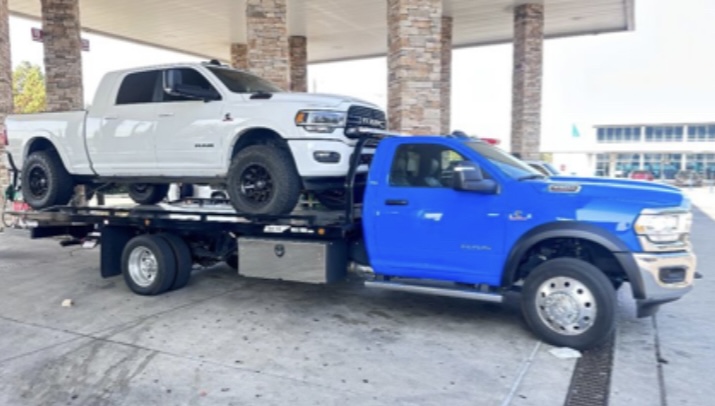
7 Situations When Your Vehicle May Need Winch-Out Recovery
1. Your Car Gets Stuck in Mud or Soft Ground
Mud is one of the most common reasons a vehicle may require recovery assistance. After rain or when driving across an unpaved surface, the ground can become soft enough for tires to sink and lose traction.
When the wheels spin, they may dig deeper into the mud instead of moving the vehicle forward. Continuing to accelerate can make the situation worse by creating deeper ruts beneath the tires.
A winch-out recovery may be appropriate when:
- The tires are spinning without moving the vehicle.
- The vehicle has sunk into soft ground.
- The car cannot move forward or backward safely.
- The surrounding ground does not provide enough traction.
Drivers should avoid aggressive acceleration and should not ask someone to stand behind or directly in front of a spinning vehicle. A recovery professional can assess whether a winch or another recovery method is suitable.
2. Your Vehicle Slides Into a Roadside Ditch
A roadside ditch can create a difficult recovery situation, especially when one or more wheels drop below the normal road surface. Even a small vehicle may become stuck if its tires lose contact with a stable driving surface.
The angle of the vehicle is particularly important. If the car is leaning toward a ditch or resting against uneven ground, attempting to drive out without proper assessment could increase the risk of damage.
Winch-out recovery may be necessary when the vehicle cannot return to the roadway under its own power. The operator must consider the ditch’s depth, the vehicle’s position, nearby obstacles, and the safest direction for recovery.
If your car is stuck off the roadway, avoid standing near the vehicle’s downhill side or attempting to pull it with another passenger vehicle. Professional equipment is important because an unsuitable pulling method can create additional hazards.
3. Your Tires Are Trapped in Sand or Loose Gravel
Sand and loose gravel can reduce tire traction. A vehicle may appear to be on a relatively flat surface but still become stuck when its tires begin sinking or spinning.
This can happen near construction areas, unpaved parking spaces, private driveways, or other surfaces where the ground is not firm.
The situation becomes more difficult when the vehicle is front-wheel drive, rear-wheel drive, or carrying additional weight that affects traction. However, four-wheel-drive vehicles can also become stuck when the surface is too loose.
A recovery operator may use a winch to move the vehicle toward a more stable surface. The recovery direction should be selected carefully to avoid dragging the tires through deeper sand or pulling the vehicle into another obstacle.
4. Your Vehicle Is Stuck on an Uneven Shoulder
Sometimes a driver moves onto the shoulder to avoid traffic or make room for another vehicle. Unfortunately, not every roadside shoulder is suitable for supporting a vehicle’s full weight.
A soft edge, uneven ground, or sloped surface can cause one or more wheels to sink. The vehicle may then become unable to return to the road safely.
If the car is close to moving traffic, safety should come before recovery. Turn on hazard lights when appropriate, remain aware of surrounding traffic, and avoid standing close to moving vehicles.
If the vehicle cannot move without slipping further off the shoulder, professional recovery may be needed. A winch-out method can sometimes help return the vehicle to a stable position before it is driven or transported.
5. Your Vehicle Is Stuck After a Minor Collision
A collision can leave a vehicle in an awkward position, even when the visible damage appears limited. A car may end up against a curb, on uneven ground, or partially off the roadway.
In these situations, the problem is not always a lack of traction. Damaged wheels, steering components, suspension parts, or bodywork may prevent the vehicle from moving normally.
Before attempting a recovery, the operator should consider whether the vehicle has structural damage, leaking fluids, damaged tires, or other conditions that make pulling it unsafe.
If the vehicle is damaged or cannot be moved safely, accident towing may be more appropriate than a simple winch-out. Depending on its position, a recovery operation may be needed before the vehicle can be loaded for transportation.
For collision-related situations, drivers can review the available accident towing service to understand the separate towing option.
6. Your Vehicle Is Stuck on a Steep or Sloped Surface
A vehicle can become stuck on a slope when its tires lose traction or when the ground is too uneven to support normal movement. This may happen on an inclined driveway, an unpaved access road, or a sloped roadside area.
Trying to accelerate uphill can cause the tires to spin. Moving backward without control can also create a dangerous situation, particularly if there are obstacles or other vehicles nearby.
A professional recovery operator can assess the slope, vehicle position, available anchor points, and direction of pull before choosing a suitable method.
Never attach a recovery line to an unknown vehicle component or attempt to pull a car using improvised equipment. Incorrect attachment points can fail under tension and cause serious injury or property damage.
7. Your Vehicle Is Trapped Against an Obstacle
A vehicle may become stuck against a curb, uneven pavement, a low barrier, or another obstacle. Sometimes the wheels are not deeply buried, but the vehicle’s position prevents it from moving without scraping or damaging its underside.
This type of situation requires an assessment of ground clearance, wheel position, and the available space around the vehicle.
A winch-out recovery may be considered if a controlled pull can move the vehicle away from the obstacle. In other situations, a different recovery or towing method may be safer.
The important point is not to force the vehicle to move before understanding what is preventing it from moving.
When Should You Choose Winch-Out Recovery Instead of Regular Towing?
Winch-out recovery and regular towing solve different problems. Choosing the right service depends on the vehicle’s position and whether it can be moved safely.
| Situation | Service that may be appropriate |
|---|---|
| Vehicle is stuck in mud | Winch-out recovery |
| Tires are trapped in sand | Winch-out recovery |
| Car is down in a roadside ditch | Winch-out recovery assessment |
| Vehicle is damaged after a collision | Accident towing or recovery |
| Vehicle runs but cannot be driven safely | Towing service |
| Vehicle is immobilized on a road | Towing or roadside assistance assessment |
| Vehicle needs transportation to a repair shop | Local towing |
If your vehicle is stuck and cannot return to a stable driving surface, a recovery assessment is a sensible first step. If it can be moved but is not safe to drive, transportation through a suitable towing service may be required.
Drivers looking for a Towing Service in Santa Ana, CA should explain the vehicle’s exact position when requesting assistance. Mention whether the vehicle is in mud, a ditch, loose gravel, or near an obstacle. This information helps the service provider understand the situation and determine what equipment may be necessary.
You can also review the company’s local towing service and light and medium-duty towing options to understand the available transportation services.
What Information Should You Give When Requesting Recovery?
Clear information helps a recovery operator evaluate the situation before arriving. Instead of simply saying that your car is stuck, explain the conditions surrounding the vehicle.
Try to provide the following details:
1. Your exact location: Share the street, nearest intersection, business, or recognizable landmark. If you are on a major road, provide the direction of travel and the nearest exit or cross street.
2. Vehicle type: Explain whether you have a sedan, SUV, pickup truck, van, or another vehicle. The vehicle’s approximate size and weight can affect equipment selection.
3. Ground conditions: Describe whether the car is stuck in mud, sand, gravel, grass, a ditch, or on a sloped surface.
4. Vehicle position: Explain whether all four wheels are on the ground, whether one side is lower, and whether the vehicle is leaning or resting against an obstacle.
5. Visible damage: Mention damaged tires, broken wheels, fluid leaks, collision damage, or anything unusual you can safely observe.
6. Accessibility: Tell the operator whether there is enough room for a recovery vehicle to approach and whether nearby traffic or obstacles may affect access.
Avoid putting yourself in danger to collect these details. Never walk into traffic or approach an unstable vehicle just to take photographs.
Important Safety Steps While Waiting for Recovery
A stuck vehicle can create risks for both the driver and passing motorists. Your first priority should be finding a safe position rather than attempting an immediate recovery.
If possible, move away from active traffic lanes and use hazard warning lights when appropriate. If the vehicle is disabled in a dangerous traffic location, contact emergency services.
The California Highway Patrol provides guidance for motorists dealing with disabled vehicles. Its roadside safety FAQ explains when drivers should contact 911 and when other roadside assistance channels may be appropriate. The California DMV Driver Handbook also discusses freeway breakdown safety and the Freeway Service Patrol.
Keep these precautions in mind:
- Do not repeatedly accelerate when the wheels are spinning.
- Do not stand in front of or behind a vehicle under recovery tension.
- Do not attach cables or straps to unsuitable vehicle components.
- Keep children and passengers away from the recovery area.
- Do not attempt to push a vehicle on a steep slope.
- Follow instructions from the recovery operator.
For additional preparation, the NHTSA emergency roadside kit recommendations explain what motorists should consider keeping in their vehicles, including a flashlight, first-aid supplies, jumper cables, and other emergency essentials.
Can Winch-Out Recovery Damage Your Vehicle?
A properly assessed recovery operation is intended to move a stuck vehicle without unnecessary damage. However, no recovery method is completely risk-free.
Damage can occur if the vehicle is pulled from an unsuitable attachment point, if the recovery direction is incorrect, or if the vehicle is already resting against an obstacle.
Before recovery begins, the operator should consider:
- Vehicle weight and overall condition.
- Available manufacturer-approved recovery points.
- Tire and suspension condition.
- Ground clearance and surrounding obstacles.
- The direction and tension required for the pull.
Drivers should disclose any known damage or unusual vehicle condition. If a vehicle has suffered collision damage, a qualified operator should determine whether it can be recovered using a winch or whether another method is necessary.
How Do Local Conditions in Santa Ana Affect Vehicle Recovery?
Santa Ana drivers use a mixture of residential streets, commercial roads, parking areas, and connecting routes throughout Orange County. Although many trips take place on paved roads, vehicles can still encounter soft shoulders, uneven surfaces, construction areas, and private access roads.
A vehicle that becomes stuck in one of these locations may require a different recovery approach from a car that simply stops running on a paved street.
Local knowledge can also help when describing a vehicle’s position. Drivers should provide a clear address or nearby landmark rather than relying only on a general city name.
For motorists in surrounding communities, the company’s service-area pages can provide additional location information:
Service availability and the type of recovery equipment required should always be confirmed when requesting assistance.
Frequently Asked Questions About Winch-Out Recovery
Is winch-out recovery the same as towing?
No. Winch-out recovery focuses on pulling a stuck vehicle from a difficult position. Towing generally involves transporting a vehicle to another location. Some situations require recovery first and transportation afterward.
Can a winch pull a car out of deep mud?
A winch may be suitable for recovering a vehicle from mud, but the operator must evaluate the depth, vehicle position, ground conditions, and available equipment before beginning.
Should I keep pressing the accelerator when my car is stuck?
No. Repeated acceleration can cause the tires to dig deeper into soft ground and may increase the risk of vehicle damage. Stop when the vehicle is clearly unable to move safely.
Does every stuck vehicle need a winch-out service?
No. Some vehicles can be moved with another suitable recovery method. Others may need regular towing, accident towing, or a different type of assistance. The vehicle’s position and condition determine the appropriate service.
What should I tell a towing company when my car is stuck?
Provide your location, vehicle type, ground conditions, vehicle position, visible damage, and any access restrictions. Accurate details help the operator assess the recovery requirements.
Get the Right Help for a Stuck Vehicle in Santa Ana, CA
A stuck vehicle can quickly become a difficult roadside situation, particularly when it is trapped in mud, sand, a ditch, or against an obstacle. Understanding when winch-out recovery may be necessary helps drivers avoid risky attempts to move a vehicle without suitable equipment.
The right solution depends on the vehicle’s condition, the ground beneath it, and the safest way to recover or transport it. In some situations, winch-out recovery may be the first step. In others, standard towing or accident towing may be more appropriate.
If your vehicle cannot move safely, explain its position and condition when requesting professional help. Choosing the correct recovery or towing method can help reduce unnecessary damage and make the next steps easier to manage.